

Hogs Football
College football coach buyouts can follow Arkansas for years to come
Fans demand fast firings, but an attorney explains why a fired coach’s paychecks can continue years after he leaves campus.

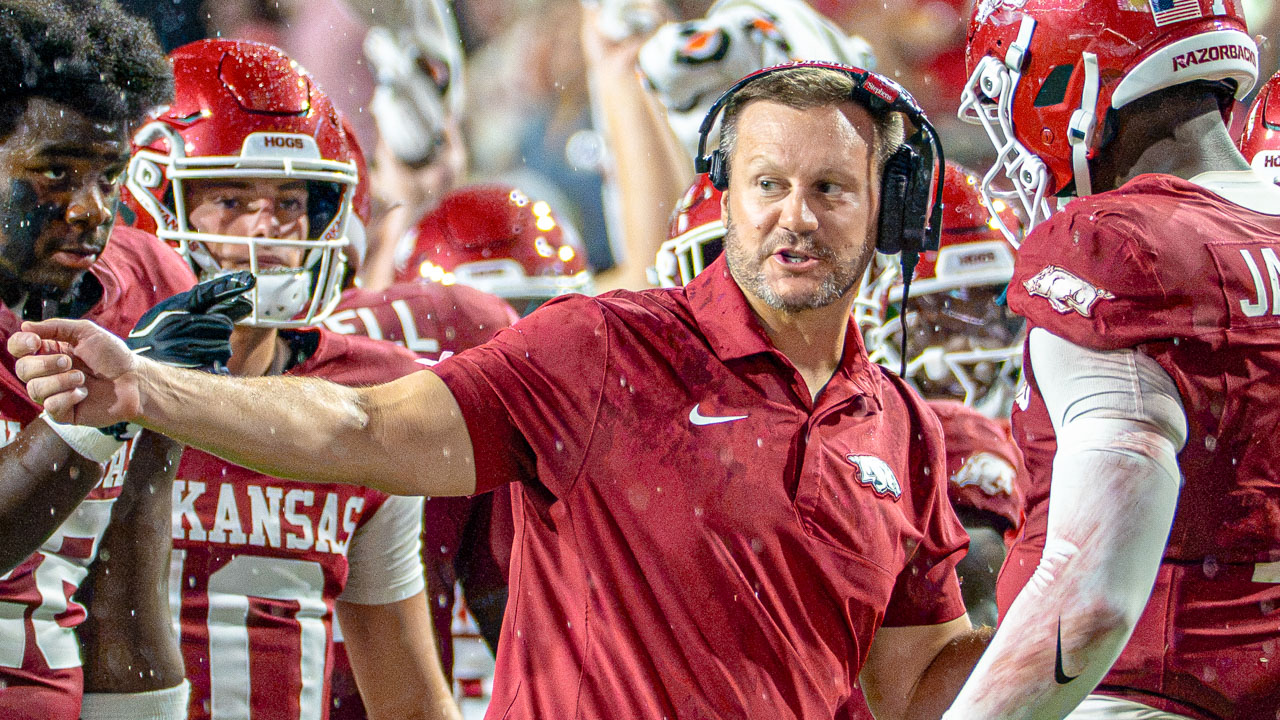
College football fans across the country have zero tolerance for losing. We’ve all seen it time and time again.
When a team struggles, the calls for change begin almost immediately. Fire the coach, get rid of the athletic director and bring in someone who can turn things around.
But amid all the frustration and demands for change, there is one question that rarely receives the same attention as the win-loss record: What happens to the money after someone is fired?
For many fans, the assumption is quite simple. When a coach is fired, a university writes a multimillion-dollar check, and everybody moves on.
If only it were that simple.
In reality, the financial obligations can continue for years, sometimes long after the coach has cleaned out his office, moved on to another university, or even found another job in an entirely different profession.
Arkansas may soon find itself confronting that reality as questions surrounding its athletic leadership continue to grow. But the Razorbacks are hardly alone.
Michigan and Ohio State move quickly
Michigan has already parted ways with offensive coordinator Jason Beck, dismissing him in his first season following a disappointing loss to Michigan State.
Ohio State followed suit, firing special teams coordinator Robby Discher after just nine games.
Different universities, different circumstances, but the message is unmistakable.
In today’s college football environment, patience is in short supply, and the pressure to win leaves little room for disappointment.
But while universities may be quick to part ways with coaches and administrators, their financial obligations are not always so easily dismissed.
What happens when the decision to fire someone comes with a price tag that follows the university for years?
As an attorney, I find one aspect of these decisions particularly interesting.
Firing a coach and paying a coach are different things
Many people confuse an employer’s right to terminate someone with the employer’s obligation to continue paying that individual. They are not necessarily the same thing.
A university may have the contractual right to dismiss a coach without cause. But exercising that right can trigger substantial financial obligations under the employment agreement.
Those obligations are commonly referred to as buyouts.
The amount depends on the contract. Some agreements guarantee a percentage of the remaining compensation, while others establish specific termination payments or provide for negotiated settlements.
And contrary to what some fans may believe, the entire amount is not always paid immediately. Depending on the agreement, a university may satisfy its obligation through monthly or annual installments extending over several years.
Think of it as purchasing an expensive automobile. You may drive it off the lot today, but the payments continue long after the excitement of the purchase has faded.
Except in college football, the university may be paying someone who no longer works there.
Arkansas has been here before
Arkansas has already experienced the financial consequences of coaching changes. When the university dismissed Bret Bielema in 2017, the resulting buyout became the subject of a legal dispute involving the Razorback Foundation.
The disagreement included questions about the former coach’s subsequent employment and the foundation’s continuing payment obligations.
It was a reminder that terminating a coach can be only the beginning of the financial and legal consequences.
More recently, Arkansas negotiated a buyout following Sam Pittman’s departure.
His contractual arrangement included provisions tied to his winning percentage, demonstrating how carefully negotiated language can influence the ultimate cost of termination.
Now consider Ryan Silverfield.
Silverfield entered his first season at Arkansas under a five-year agreement reportedly worth $33.5 million.
Under the reported terms, if Arkansas terminates him without cause, the university would owe 70 percent of his remaining compensation. That is a substantial commitment, particularly for a coach still in his first season.
Where the buyout money comes from
Whether Arkansas should make another coaching change is a separate question.
But fans calling for immediate action should understand that the financial consequences cannot simply be wished away.
The money has to come from somewhere.
Depending on the university and its arrangements, buyout obligations may involve athletic department revenues, private foundations, booster contributions, or other available funding sources.
But even when wealthy donors help finance a coaching change, there is an opportunity cost.
Money committed to paying a former coach is money that might otherwise support the program’s future, unless donors have specifically restricted their contributions.
Unfortunately, the financial demands facing college athletics are growing. Universities are navigating athlete revenue sharing, NIL-related expenses, facility improvements, recruiting demands, and the continuing pressure to compete at the highest level.
Against that backdrop, paying one coach to leave while offering another a lucrative contract to arrive raises a legitimate question about financial priorities. Just how many times can a university afford to start over?
Contract language shapes the final cost
There is another legal consideration that deserves attention. Not every coaching contract treats termination the same way. Some agreements distinguish between termination for cause and termination without cause.
Others include provisions requiring a dismissed coach to seek comparable employment or allowing the university to reduce its payments if the coach obtains another position.
These provisions can make an enormous difference. A coach who receives another lucrative position may or may not reduce the former university’s financial obligation.
The answer depends on the contractual language. That is why the headline announcing a $10 million or $20 million buyout rarely tells the entire story.
The payment schedule, conditions, offsets, and potential disputes can be just as important as the amount itself.
And those details are generally negotiated long before anyone knows whether the coach will succeed.
Accountability versus impatience
There is no question that universities must hold coaches and administrators accountable.
Winning matters, but so does leadership. Accountability should not be confused with impatience. A first-year coach inherits players, personnel decisions, recruiting challenges, and sometimes an entire program in transition.
Expecting immediate results may be understandable, particularly when millions of dollars are involved. But the real question is whether the expectation is reasonable.
The recent dismissals at Michigan and Ohio State suggest that even assistant coaches may have little time to prove themselves before universities decide it is time for a change.
Whether those decisions were justified is certainly open to debate.
But decisions with potentially lasting financial consequences deserve more than an emotional reaction to a disappointing Saturday.
University administrators have a responsibility to consider not only whether a coach should remain, but also what the decision to terminate will cost and whether that cost advances the institution’s long-term interests.
What Arkansas fans deserve to know
Arkansas fans have every right to demand a competitive football program. They also deserve to understand the financial consequences of the decisions being made on their behalf.
In college football, everyone wants to know who will be fired next.
Perhaps the more important question is how many former coaches universities can afford to keep paying while trying to build winning programs.
Deborah A. Wilson is a practicing attorney, writer, and avid sports fan. She is the author of the speculative novel The Seam: Secrets Beneath the North Pole.
Disclaimer: This article is intended for general informational and commentary purposes and does not constitute legal advice.


| Sat, Sep 5 |  | vs North Alabama | W 31-14 |
| Sat, Sep 12 |  | @ Utah | L, 43-10 |
| Sat, Sep 19 |  | Georgia | L, 45-17 |
| Sat, Sep 26 |  | Tulsa | W 34-6 |
| Sat, Oct 3 |  | @ Texas A&M | L, 34-7 |
| Sat, Oct 10 |  | Tennessee | L, 24-17 |
| Sat, Oct 17 |  | @ Vanderbilt | W 31-21 |
| Sat, Oct 31 |  | vs Missouri | L, 34-10 |
| Sat, Nov 7 |  | @ Auburn | L, 26-23 |
| Sat, Nov 14 |  | South Carolina | 6:45 PM SEC Network |
| Sat, Nov 21 |  | @ Texas | 2:30 PM ABC or ESPN |
| Sat, Nov 28 |  | vs LSU | Early Kickoff 11:00 AM-Noon |


-
 Hogs Football1 year ago
SEC adopts 9‑game schedule in 2026; Arkansas‑Missouri rivalry likely annual
-
 Hogs Football11 months ago
Razorbacks announce full 2026 schedule with SEC, Utah trip ahead
-

 Eating NWA1 year ago
CJ’s Butcher Boy Burgers keeps Fayetteville’s classic flavor fresh
-
 Hogs Football7 days ago
Arkansas one-score losses hit nine straight with 26-23 loss at Auburn
-

 Eating NWA1 year ago
Oak Steakhouse Rogers: Steaks, service and skyline in NWA
-

 Hogs Baseball4 months ago
Hogs infielder Kozeal drafted by Marlins after big junior year
-
 Hogs Football4 months ago
Razorback fans circle Texas A&M every year but math says stop it
-
 Hogs Baseball6 months ago
Arkansas Got Snubbed by the NCAA Selection Committee