

Hogs Football
Attorney says CFP expansion could narrow paths for HBCUs, FCS
As the sport weighs a 24-team bracket, HBCUs and smaller schools could lose valuable regular-season games against major power-conference programs.

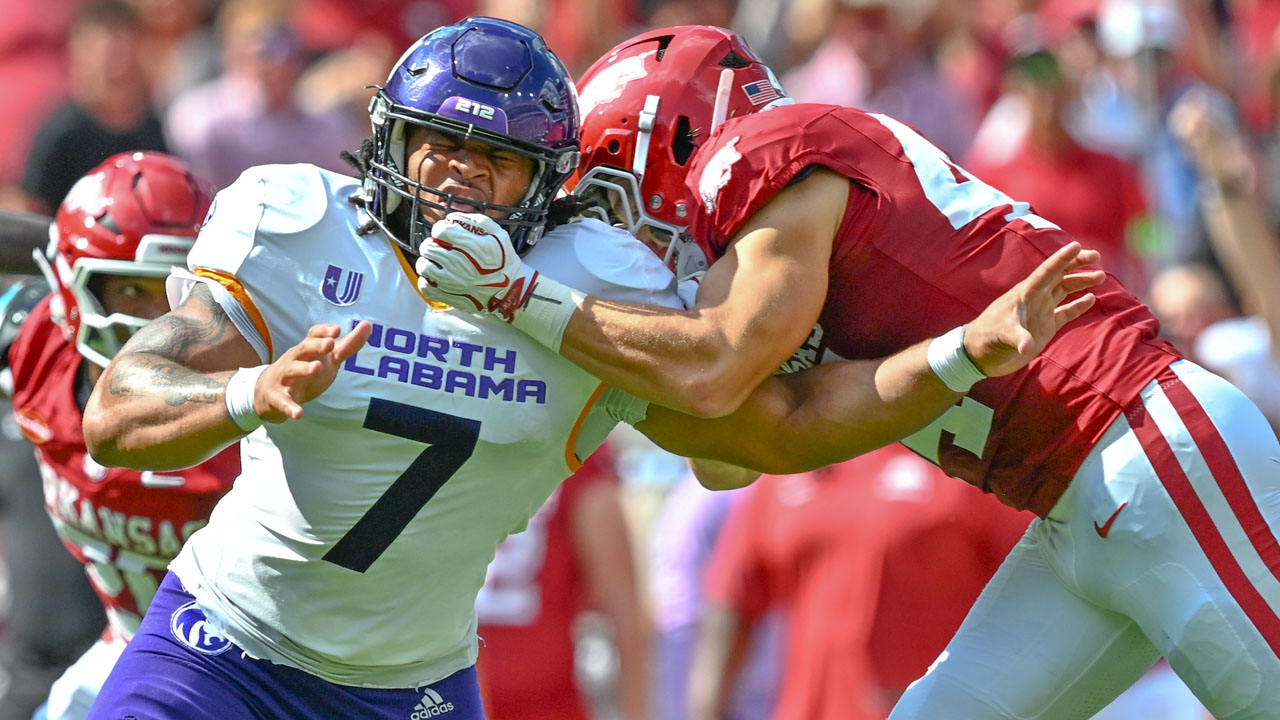
Is college football preparing for another transformation?
Discussions about expanding the College Football Playoff from 12 to 24 teams have generated considerable interest, particularly among programs hoping for a greater opportunity to compete for a national championship.
While much of the attention has focused on which teams might gain entry into the postseason, another question deserves consideration:
What happens to the schools that may find themselves with fewer opportunities to compete during the regular season?
For decades, early-season non-conference games have brought together major football programs and smaller institutions, including Historically Black Colleges and Universities (HBCUs).
These matchups rarely receive the attention reserved for conference rivalries, but they serve an important purpose in college athletics.
What these matchups provide both sides
For smaller programs, these games provide revenue, national exposure, recruiting opportunities, and the experience of competing before some of the largest crowds in college football.
For major programs, they offer scheduling flexibility, opportunities to develop younger players, and games that often generate substantial home attendance.
It is a relationship built on mutual interests, even if the financial benefits and competitive advantages are not equally distributed. The national attention surrounding HBCU football increased considerably during Deion Sanders’ tenure at Jackson State University.
Coach Prime brought visibility to programs whose athletic traditions had long deserved greater recognition. His presence also demonstrated the public interest that HBCU football could generate when given a larger national platform.
But as college football continues to evolve, the question is whether some of these opportunities could become more difficult to secure.
According to Associated Press reporting, 127 games between Football Bowl Subdivision (FBS) and Football Championship Subdivision (FCS) programs were scheduled for the 2026 season, including more than 20 involving HBCUs.
The financial stakes of guarantee games
These games frequently involve substantial financial guarantees. Power Four programs paid FCS opponents an average of approximately $525,000 in 2026. For institutions operating with more limited athletic budgets, such payments can help support scholarships, travel, equipment, and other program expenses.
Grambling State, for example, reportedly received $1 million for its 2025 game against Ohio State. Yet the importance of these games cannot be measured exclusively in dollars.
They also provide opportunities for athletes to compete on a national stage and for universities to introduce their institutions to audiences they might not otherwise reach.
That exposure has value, even when the scoreboard is decidedly one-sided.
The proposed 24-team playoff could change how major programs construct their schedules. Discussions have included requiring Power Four teams to play at least 10 games against other power-conference opponents or Notre Dame. Smaller FCS institutions throughout the country could face similar challenges.
College football is not simply an athletic enterprise. It is an increasingly complex commercial marketplace governed by contracts, conference agreements, media rights, and federal antitrust principles.
Antitrust law and contract considerations
Under Section 1 of the Sherman Act, certain agreements among competing institutions may face scrutiny if they unreasonably restrain competition. Section 2 addresses monopolization and certain exclusionary conduct involving monopoly power.
These laws do not prohibit conferences from establishing scheduling requirements or pursuing arrangements they believe will strengthen their competitions. Nor would a reduction in games against smaller schools, standing alone, establish an antitrust violation. The legal inquiry would be considerably more complicated.
It would require examining the agreements themselves, the relevant market, the competitive effects of the restrictions, and the legitimate business justifications offered by the participating institutions.
College football games are frequently scheduled years in advance. If changing conference requirements or postseason incentives cause institutions to cancel previously negotiated matchups, the contractual consequences could be significant.
For a smaller university counting on a substantial payment, the difference between playing a scheduled game and receiving a cancellation fee may extend beyond the immediate financial calculation. Lost exposure, recruiting opportunities, and institutional relationships may be difficult to replace.
It would be misleading to suggest that HBCUs remain entirely dependent upon these matchups. Many have developed alternative revenue sources through sponsorships, media arrangements, streaming platforms, and traditional rivalry games.
Morgan State athletic director Dena Freeman-Patton has publicly explained that these games are increasingly viewed as opportunities rather than necessities. Smaller institutions should have the freedom to determine which athletic and financial arrangements best serve their students and universities.
Weighing the broader consequences
The growth of college football has produced extraordinary opportunities for athletes, universities, broadcasters, and conferences. Expanding the playoff may allow more programs to pursue a national championship and generate additional revenue throughout the sport.
But when institutions with substantial economic influence make decisions affecting the structure of college athletics, it is reasonable to examine the consequences for programs operating outside that circle of influence.
That examination need not begin with accusations of exclusion, or unlawful conduct. It can begin with a simpler question: Have the broader consequences been fully considered?
College football’s future should not be measured solely by the number of teams admitted to the postseason. It should also be measured by the opportunities available to institutions throughout the regular season.
Smaller programs have contributed to the history, traditions, and development of college football for generations. Their place in that history is not dependent upon invitations from larger institutions.
But their future opportunities may be affected by decisions made far beyond their campuses.
As college football considers opening the postseason to more teams, it should also consider whether the road to that postseason is becoming narrower for everyone else.
Deborah A. Wilson is a practicing attorney in Northern Virginia, writer, avid sports fan, and author of the speculative fiction novel The Seam: Secrets Beneath the North Pole.
Legal Disclaimer: This article is provided for informational and commentary purposes only and does not constitute legal advice. The views expressed are those of the author and should not be construed as a legal opinion concerning any particular institution, conference, organization, or individual. Nothing in this article creates an attorney-client relationship.

| Sat, Sep 5 |  | vs North Alabama | W 31-14 |
| Sat, Sep 12 |  | @ Utah | L, 43-10 |
| Sat, Sep 19 |  | Georgia | L, 45-17 |
| Sat, Sep 26 |  | Tulsa | W 34-6 |
| Sat, Oct 3 |  | @ Texas A&M | L, 34-7 |
| Sat, Oct 10 |  | Tennessee | L, 24-17 |
| Sat, Oct 17 |  | @ Vanderbilt | W 31-21 |
| Sat, Oct 31 |  | vs Missouri | L, 34-10 |
| Sat, Nov 7 |  | @ Auburn | 11:45 AM SEC Network |
| Sat, Nov 14 |  | South Carolina | 6:45 PM SEC Network |
| Sat, Nov 21 |  | @ Texas | Afternoon 2:30-3:30 PM |
| Sat, Nov 28 |  | vs LSU | Early Kickoff 11:00 AM-Noon |

-
 Hogs Football1 year ago
SEC adopts 9‑game schedule in 2026; Arkansas‑Missouri rivalry likely annual
-
 Hogs Football11 months ago
Razorbacks announce full 2026 schedule with SEC, Utah trip ahead
-
 Eating NWA1 year ago
CJ’s Butcher Boy Burgers keeps Fayetteville’s classic flavor fresh
-

 Eating NWA1 year ago
Oak Steakhouse Rogers: Steaks, service and skyline in NWA
-

 Hogs Baseball4 months ago
Hogs infielder Kozeal drafted by Marlins after big junior year
-
 Hogs Football4 months ago
Razorback fans circle Texas A&M every year but math says stop it
-
 Hogs Baseball5 months ago
Arkansas Got Snubbed by the NCAA Selection Committee
-
 News11 months ago
Razorbacks DL Ian Geffrard hits portal after uneven 2025 season