
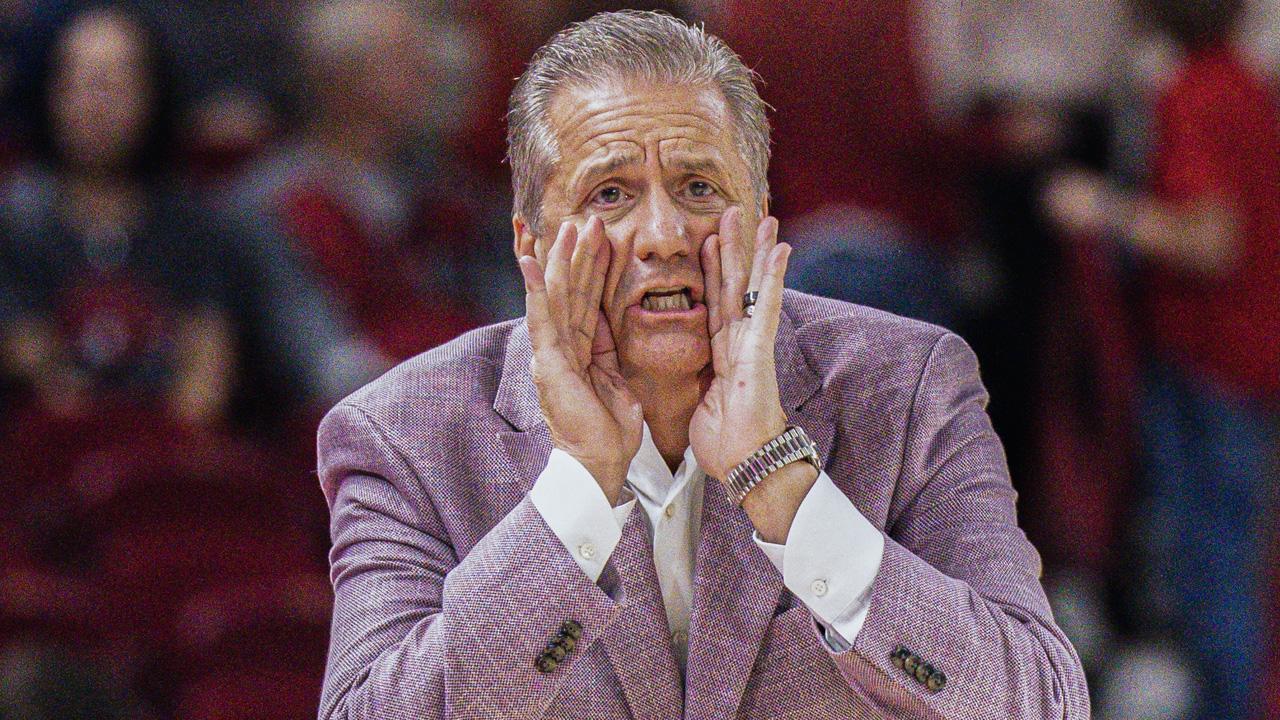
When most people think of John Calipari, they think of winning.
His name is closely associated with NBA standouts and championship basketball. Shai Gilgeous-Alexander, Karl-Anthony Towns, Anthony Davis, Devin Booker, John Wall and DeMarcus Cousins are among the most recognizable players he has coached.
These household names all passed through Calipari’s programs. While their careers differ, together they illustrate why his ability to recruit and prepare elite talent remains central to his appeal.
This season, NBA fans may have a reason to watch the Washington Wizards as a potential darkhorse championship contender.
Once dismissed as the laughingstock of the NBA, the Wizards now have a combination of talent and leadership that includes Davis, a Calipari standout seeking to revitalize his career after years of injury setbacks.
Davis, who helped deliver Calipari’s national championship at Kentucky, now faces a different challenge: helping Washington turn talent into victories.
With Trae Young directing the offense and rookie AJ Dybantsa bringing fresh promise, could the Wizards become the NBA’s next darkhorse?
Talent alone does not settle the question
I submit that the question requires more than counting recognizable names. Basketball history is crowded with talented rosters that disappointed their fans.
Winning depends on how the pieces fit, whether players remain healthy and what happens when individual ambitions meet the demands of a team.
For Arkansas fans watching Darius Acuff, that professional legacy gives Calipari’s player development particular relevance.
Davis offers something especially important to Washington: evidence that extraordinary talent can embrace a role that makes everyone around him better.
Consider Kentucky’s 2012 national championship victory over Kansas. Davis scored just six points but finished with 16 rebounds, six blocks and five assists.
On college basketball’s biggest stage, he demonstrated that the most influential player does not always have to be the leading scorer.
Washington could benefit from that lesson and the skills Davis developed under Calipari’s leadership.
How the Wizards’ pieces could fit
Young gives the Wizards a guard capable of creating opportunities for teammates while demanding attention himself. Dybantsa offers a young scorer whose development could shape the franchise’s future.
Davis supplies an experienced interior presence who can finish possessions offensively and disrupt them defensively. On paper, those abilities complement one another.
Young can create the opening, Davis can punish a defense near the basket, and Dybantsa can attack the space that attention to the veterans creates.
If the partnership develops, the rookie can grow without carrying every possession or every expectation himself.
The harder questions begin at the other end of the floor.
Can Washington defend consistently? Can its players communicate through missed assignments and difficult stretches? Can Davis remain available often enough to anchor the team? Can a promising rookie learn the professional game while helping a group trying to win now?
If the preseason game against the Knicks is any indication, there is reason for optimism. One preseason performance cannot answer every question, but it can offer a glimpse of the potential a darkhorse needs.
A title-game lesson for a young roster
Davis’s experience matters here. He understands championship expectations. His Kentucky title-game performance offers a useful example for a young teammate: a difficult shooting night need not become an unproductive night.
Contributing when shots stop falling could prove as important to Washington as any scoring breakthrough.
The Calipari connection also carries another familiar name for Wizards fans. John Wall, another former Kentucky player, became a defining figure in Washington basketball.
Davis now offers a different link to that coaching lineage, at a different stage of his career and in a different role.
Of course, none of this means Calipari is directing Washington’s rebuild from Fayetteville. The Wizards must establish their own identity.
But watching Davis navigate this challenge gives Arkansas fans another way to consider their coach’s legacy: how his former players apply their abilities years after leaving college.
Proving it on the floor
Recognizable names cannot substitute for defensive effort, depth or dependable execution.
Still, a team with an accomplished playmaker, a veteran interior force and a gifted young scorer deserves a closer look.
For Arkansas fans, Davis supplies the Calipari connection.
We saw another Calipari standout, Karl-Anthony Towns, help deliver a championship to New York after a 53-year drought. Just a year earlier, Gilgeous-Alexander led Oklahoma City to its own title.
For those of us in Washington, those successes make the possibility feel closer — and we are banking on Davis bringing some of that championship fortune to the nation’s capital.
Perhaps this is the season the Wizards become a team that opponents overlook at their own expense.
Deborah A. Wilson is a Georgetown Law graduate, a practicing attorney in Northern Virginia and the author of The Seam: Secrets Beneath the North Pole.