

Hogs Football
SEC and Big Ten back college sports bill in Senate
The SEC and Big Ten now support a Senate bill that could reshape how much schools pay college athletes.

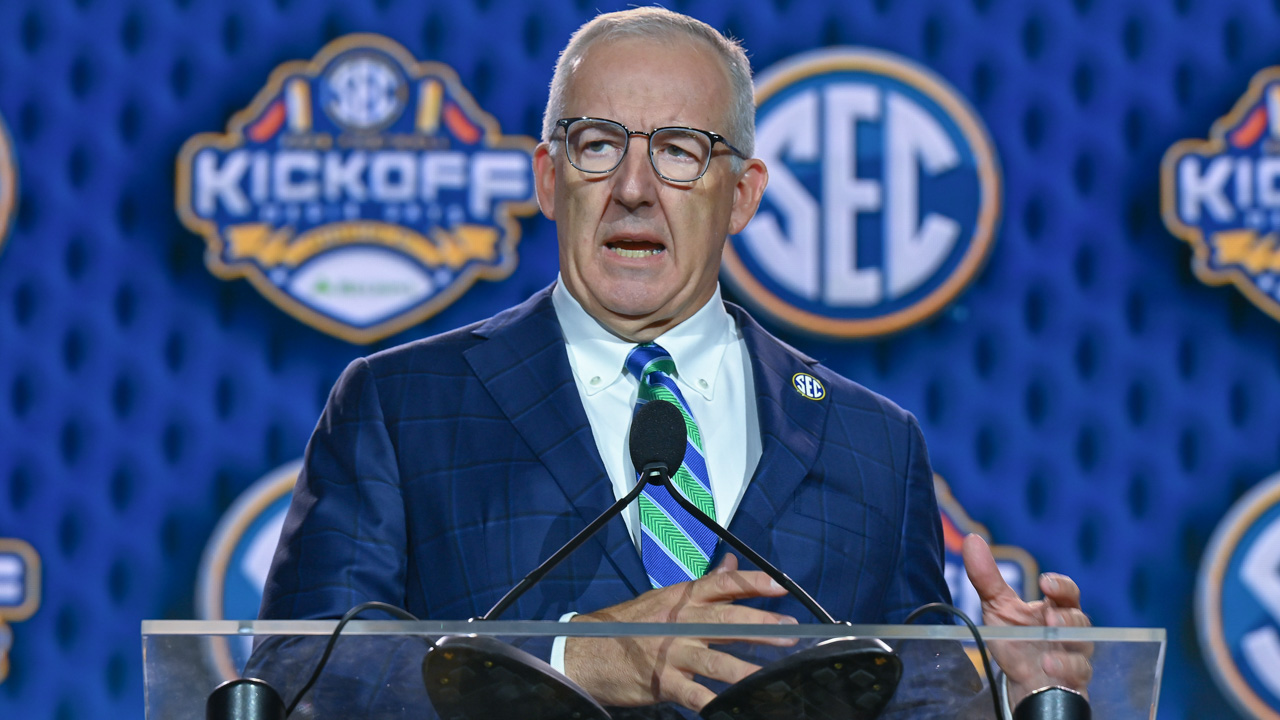
The SEC and Big Ten agreed Friday night to support the Protect College Sports Act, a Senate bill that seeks to regulate how college athletes get paid.
The move ended a fast-moving week of negotiations and pulled the bipartisan bill back from what had looked like a dead end.
School presidents from both conferences voted to back the bill after getting last-minute changes to language about third-party name, image and likeness deals and the so-called “associated entities” that often arrange them.
The bill still needs 60 votes to move forward. The Senate wants that vote to happen before it leaves for summer break next Friday.
Sens. Ted Cruz, R-Texas, and Maria Cantwell, D-Wash., are the bill’s lead sponsors.
Cantwell reacted to the news on social media.
“Good,” she posted on X. “Now progress can be made in protecting women and Olympic athletes and moving this legislation closer to the President’s desk.”
Good. Now progress can be made in protecting women and Olympic athletes and moving this legislation closer to the President’s desk. https://t.co/RWytYnzVya
— Sen. Maria Cantwell (@SenatorCantwell) August 1, 2026
Extra pay for players is key change
Cody Campbell, a Texas Tech regent who helped shape the bill, called the SEC and Big Ten’s support “a major breakthrough that moves us closer to a Senate vote and a better future” for college sports.
The most significant change in the reworked bill lets schools set aside $27.5 million to keep players, on top of the $21.3 million cap already in place. That’s a total of about $48.8 million per school.
The extra money is meant to replace payments that used to come from outside “associated entities,” which had been allowed to exceed the existing cap. Many schools complained those payments made the cap meaningless.
The SEC and Big Ten also pushed for stronger language requiring that outside NIL deals come from real outside groups rather than from a school’s own media-rights partner.
Some questions remain unsettled, including whether the new cap will match the terms of the House settlement and what would happen to the College Sports Commission, which currently enforces NIL rules.
Opposition and a divided House await
Not every senator is on board. Sen. Tommy Tuberville, R-Ala., has opposed the bill from the start.
Sen. Bill Cassidy, R-La., said before the latest changes that the bill “as written today” “creates chaos and eliminates opportunity for student-athletes.”
Even if the bill clears the Senate, it would still need to pass the House, which spent more than a year unable to advance a similar measure known as the SCORE Act.
Smaller conferences have generally supported the bill, though some may reconsider now that larger leagues are positioned to pay players significantly more.
President Donald Trump got involved late Thursday night, a move that helped bring negotiators back to the table after the conferences had balked at earlier drafts.
NCAA court losses added pressure
The SEC and Big Ten’s announcement came just hours after the NCAA lost a pair of court cases involving a rule that would have given most Division I athletes five years to complete five seasons of eligibility.
NCAA President Charlie Baker pointed to those losses while urging lawmakers to act, saying “it is long past time leaders across college sports call for the immediate passage of the bipartisan Protect College Sports Act.”
The Razorbacks and the rest of the SEC now wait alongside the Big Ten and the Hogs’ fellow member schools to see whether the Senate can secure the votes needed before next Friday’s deadline.
Key takeaways
- The SEC and Big Ten backed the Protect College Sports Act Friday night after winning changes to NIL third-party language, and the bill now needs 60 Senate votes before next Friday’s recess.
- The reworked bill lets schools pay up to $48.8 million total per roster by adding a $27.5 million allowance on top of the existing $21.3 million cap.
- The bill still faces opposition from senators like Tommy Tuberville and Bill Cassidy and would need to clear a divided House, which stalled a similar bill for more than a year.

| Sat, Sep 5 |  | vs North Alabama | W 31-14 |
| Sat, Sep 12 |  | @ Utah | L, 43-10 |
| Sat, Sep 19 |  | Georgia | L, 45-17 |
| Sat, Sep 26 |  | Tulsa | W 34-6 |
| Sat, Oct 3 |  | @ Texas A&M | 6:00 PM ESPN or ESPN2 |
| Sat, Oct 10 |  | Tennessee | 3:15 PM SEC Network |
| Sat, Oct 17 |  | @ Vanderbilt | TBA |
| Sat, Oct 31 |  | vs Missouri | TBA |
| Sat, Nov 7 |  | @ Auburn | TBA |
| Sat, Nov 14 |  | South Carolina | TBA |
| Sat, Nov 21 |  | @ Texas | TBA |
| Sat, Nov 28 |  | vs LSU | TBA |

-
 Hogs Football1 year ago
SEC adopts 9‑game schedule in 2026; Arkansas‑Missouri rivalry likely annual
-
 Hogs Football10 months ago
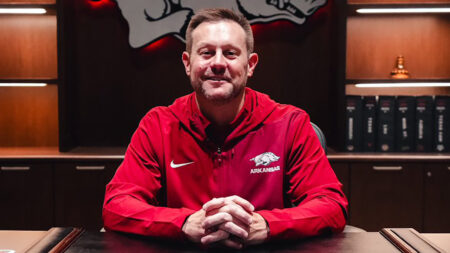
Razorbacks announce full 2026 schedule with SEC, Utah trip ahead
-
 Eating NWA12 months ago
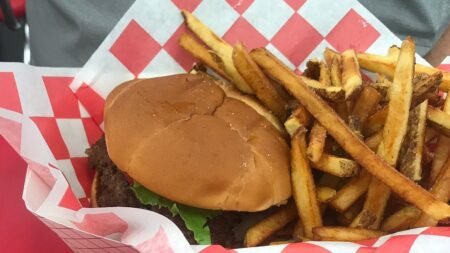
CJ’s Butcher Boy Burgers keeps Fayetteville’s classic flavor fresh
-

 Eating NWA12 months ago
Oak Steakhouse Rogers: Steaks, service and skyline in NWA
-

 Hogs Baseball3 months ago
Hogs infielder Kozeal drafted by Marlins after big junior year
-
 Hogs Football3 months ago
Razorback fans circle Texas A&M every year but math says stop it
-
 Hogs Baseball4 months ago
Arkansas Got Snubbed by the NCAA Selection Committee
-
 News9 months ago
Razorbacks DL Ian Geffrard hits portal after uneven 2025 season